

What got me looking at this was Verizon.
During Verizon’s second-quarter call, Dan Schulman explained that the company is removing old copper equipment from thousands of central offices. That is freeing up buildings that already have power, permits, backup systems, and network connections. Verizon is starting to reuse some of them as small data centers for AI inference, and Schulman said an early trial sold out its available capacity within 24 hours.
At Goldman Sachs Communacopia this week, he went further. Verizon is already signing agreements around some of those decommissioned sites and expects the business to start generating noticeable revenue from inference and edge computing next year.
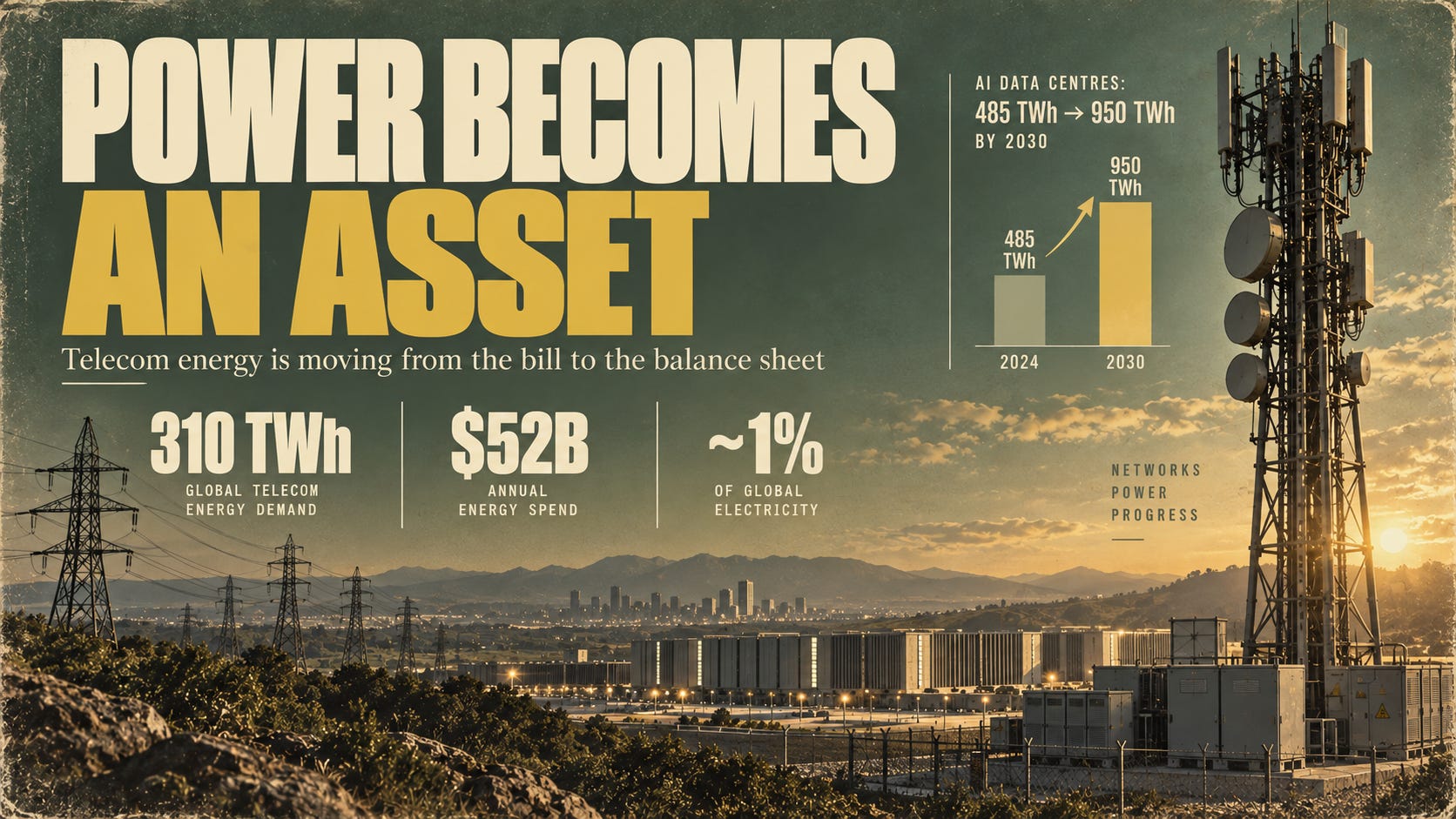
Mobile operators probably consumed around 310 TWh of electricity in 2025, roughly 1% of global electricity use, and spent around $52 billion on energy. Operators also consume billions of liters of diesel and gasoline every year, while networks account for more than three-quarters of their electricity use.
For years, the objective has been obvious. Reduce RAN consumption, shut down legacy equipment, replace diesel and buy electricity more efficiently.
But some of the same infrastructure built to consume electricity is beginning to acquire its own economic value. Base station batteries are entering electricity markets. Tower companies are building businesses around power. Old telephone exchanges are attracting AI workloads because usable electrical capacity is becoming difficult to obtain quickly. And software developed by a telco to manage its own batteries is now being sold to the energy industry.
I do not expect telecom operators to become utilities. But I increasingly think energy could become another infrastructure business inside telecom.
Calling telcos power plants pushes the definition. The direction is still worth understanding.
The Battery Gets a Second Job
Every mobile site needs backup power. The battery is there for the hours when the grid fails and, under normal conditions, spends most of its life waiting.
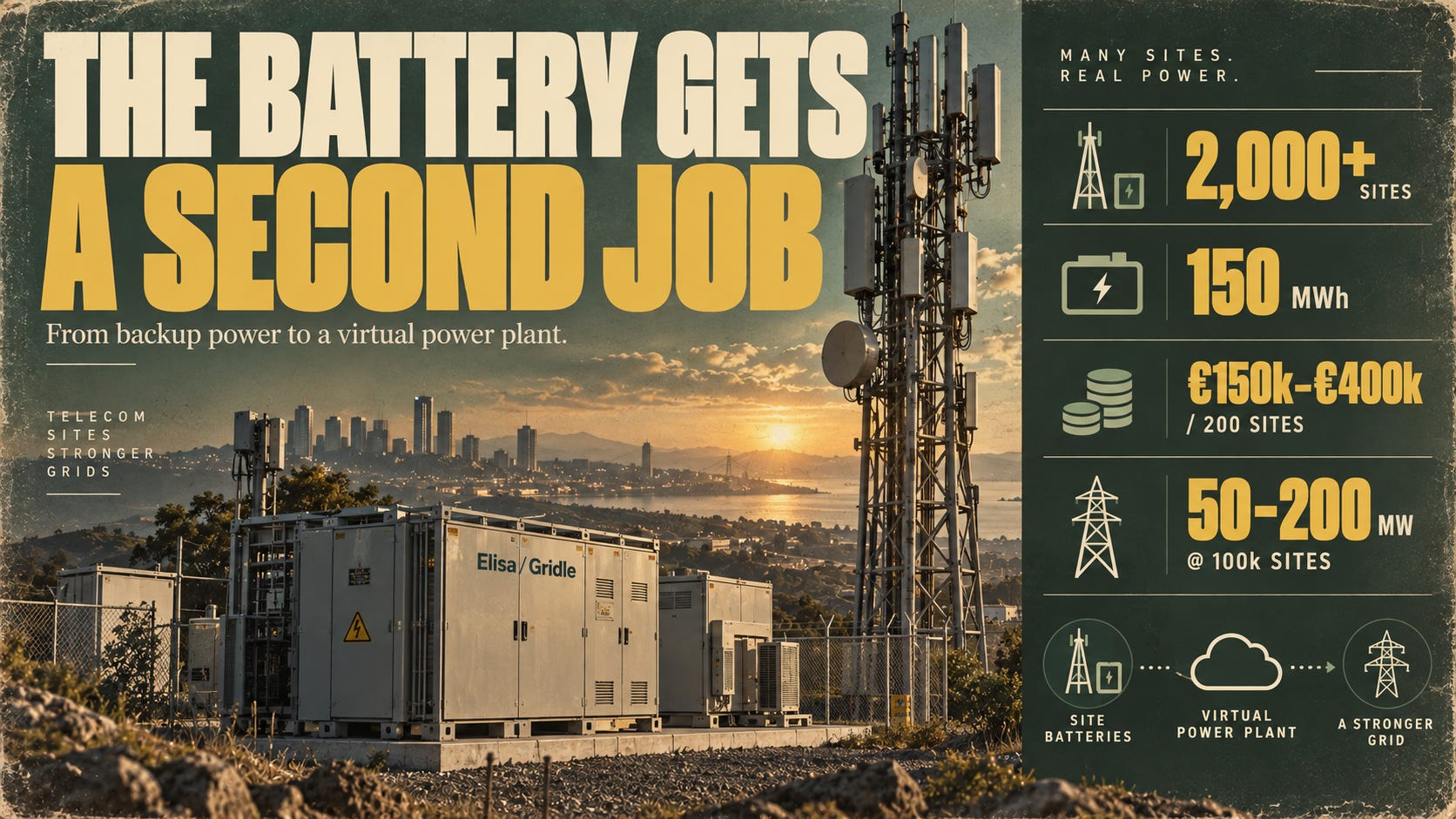
Elisa has been working on a different model in Finland. Its Gridle platform manages more than 2,000 telecom sites and over 150 MWh of distributed battery capacity as a virtual power plant. The software calculates how much charge needs to remain available for network resilience and how much capacity can be used in wholesale and balancing electricity markets.