

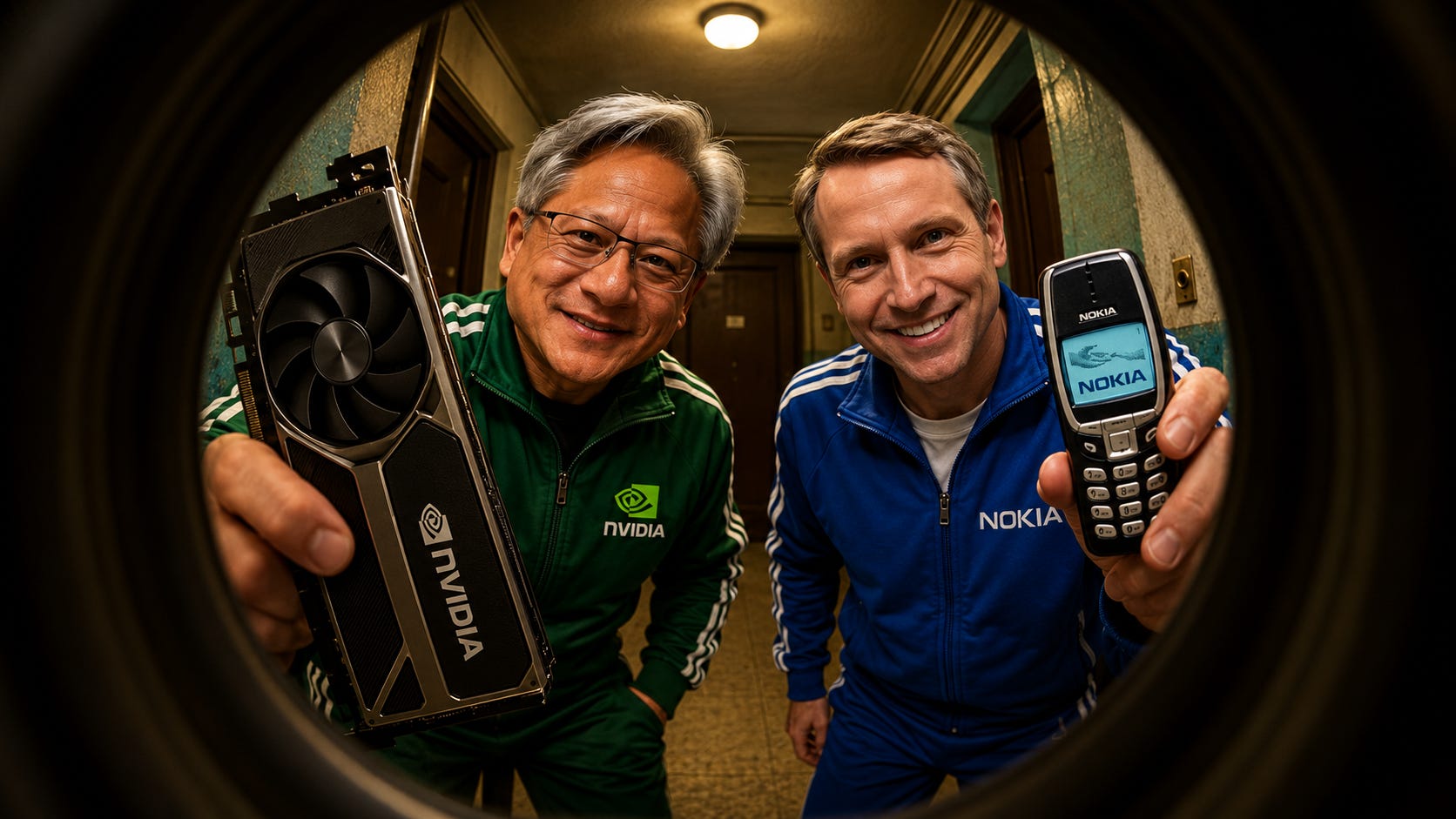
When Nokia CEO Justin Hotard announced the partnership with Jensen Huang and NVIDIA last year, many in the telecom industry were skeptical. Some questioned the economics of GPUs in radio networks. Others worried Nokia would become too dependent on NVIDIA. I had a completely different reaction. Partnering with Jensen Huang, arguably the GOAT of AI computing and a key driver of the AI economy's transformation, looked like one of the smartest moves a telecom infrastructure vendor has made in years.
NVIDIA brings much more than GPUs. It brings CUDA, computing architectures, AI models, development tools, and an enormous ecosystem of software companies. Nokia has spent decades building some of the world's most sophisticated radio systems, but developing an equivalent AI ecosystem internally would take years and billions of dollars. NVIDIA also invested $1 billion in Nokia, acquiring approximately 2.9% of the company. That gives both companies a substantial economic interest in making the partnership successful.
And after just one year, the progress is pretty wild.
Last week, Nokia invited me to an analyst briefing with its technology leadership. We discussed everything from neural radio receivers and GPU architectures to third-party radio applications, sensing, and autonomous network agents. This week, Nokia and NVIDIA announced another round of developments at GTC Berlin. The announcements have plenty of substance, so I want to explain what these guys are actually building.
1. T-Mobile completes the first commercial-network AI-RAN call
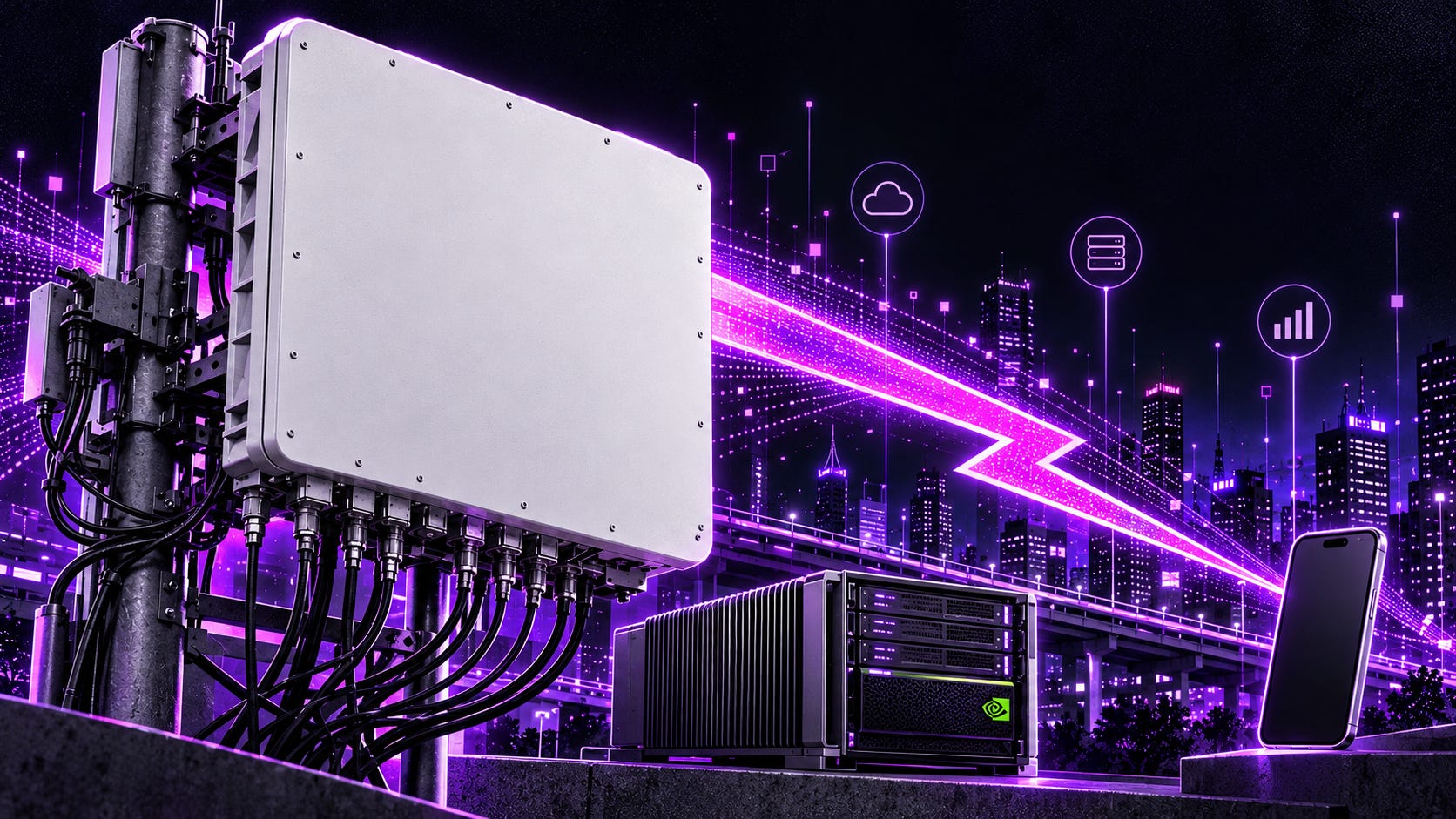
Nokia, NVIDIA, and T-Mobile have completed what they describe as the world’s first AI-RAN call on a live commercial mobile network. The demonstration took place in Bellevue, Washington, using Nokia Massive MIMO radios, CUDA-accelerated anyRAN software, NVIDIA Aerial RAN Computer infrastructure, and an existing commercial 5G standalone core. The call was made using an ordinary commercial smartphone.
Running radio software on accelerated computing is considerably harder than running conventional enterprise applications. A 5G base station must process radio signals within extremely tight timing deadlines, sometimes measured in fractions of a millisecond. Missing those deadlines can affect scheduling, signal decoding, and ultimately the customer’s connection. Nokia has now demonstrated that its software can operate on this new computing architecture in a live operator environment.
The call does not prove the promised spectral efficiency improvements. Nokia will introduce and validate those algorithms through further trials. But going from a major architectural partnership to a working commercial-network demonstration in twelve months is unusually fast for the telecom industry.
2. Spectral efficiency is already improving, with 2x on the roadmap
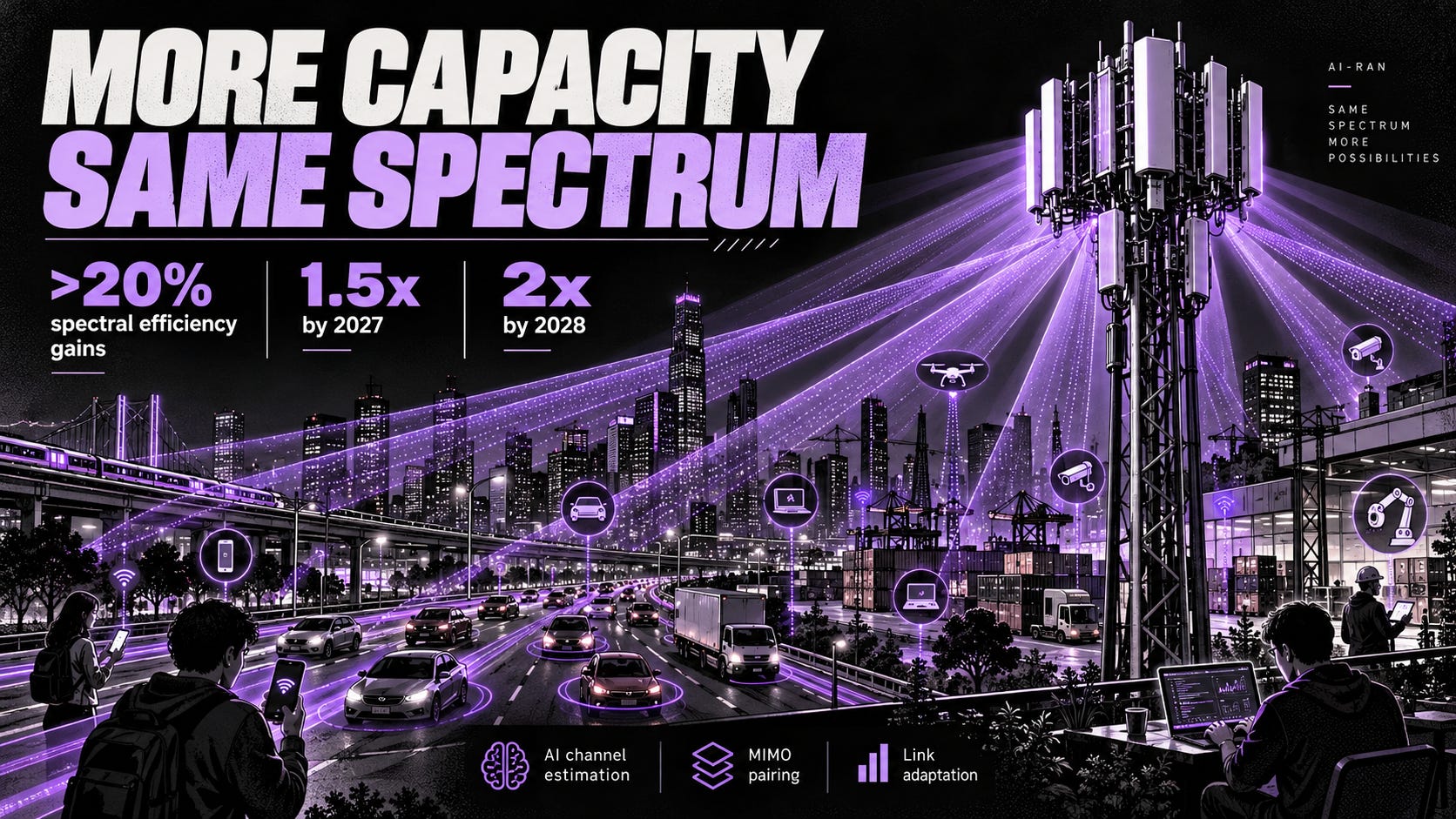
Nokia has reported more than 20% combined spectral efficiency improvement from AI-assisted radio algorithms on existing platforms. The company is now targeting 1.5x spectral efficiency by 2027 and 2x by 2028, particularly in demanding TDD Massive MIMO configurations.