

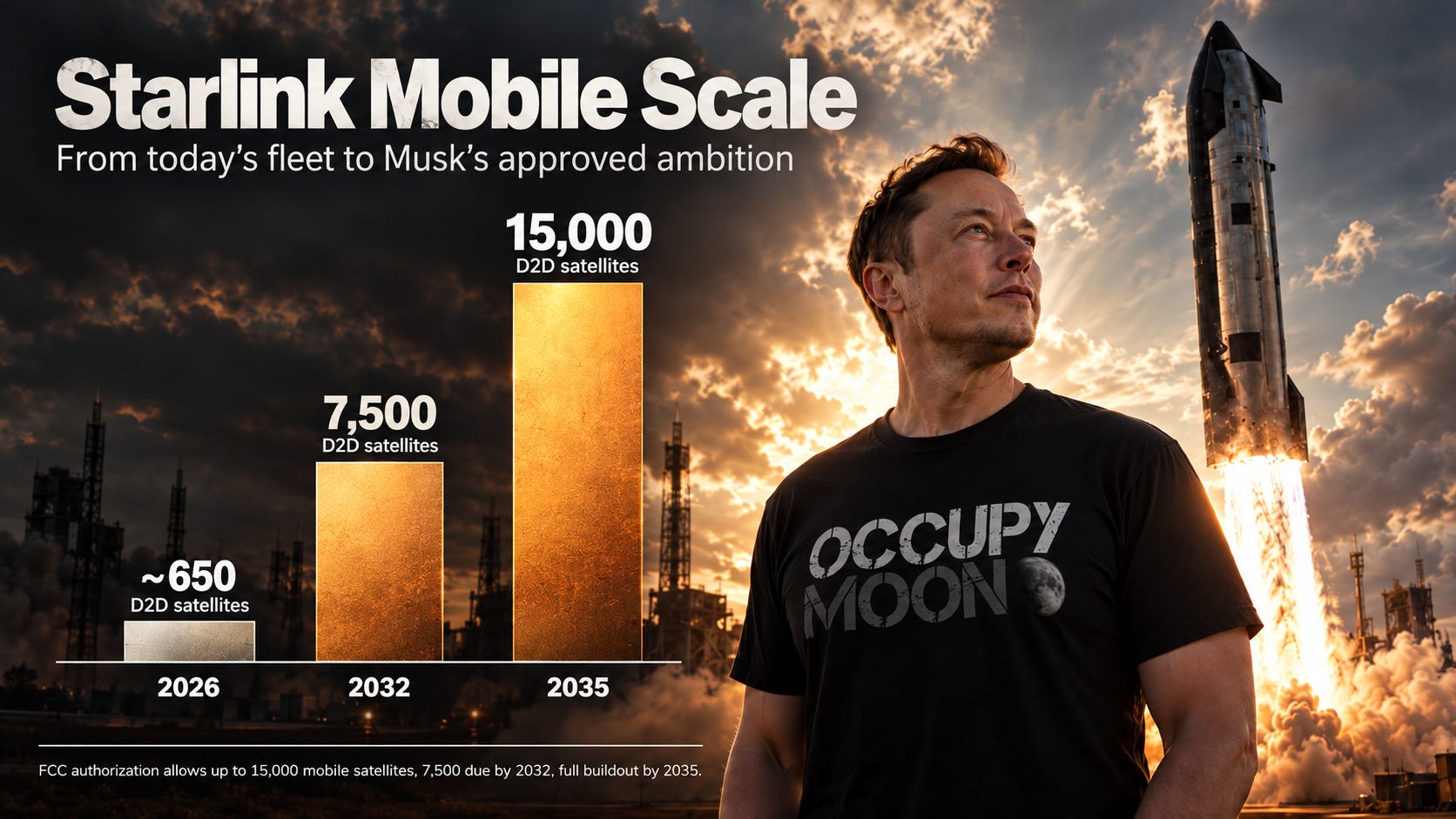
On October 6, the FCC authorized SpaceX to deploy 15,000 new satellites. But these aren’t the roughly 10,000 Starlink satellites already providing broadband from space. They’re a new generation of specialized mobile satellites, designed to connect directly to ordinary compatible smartphones, with SpaceX targeting speeds of up to 150 Mbps.
This is a much bigger ambition than eliminating mobile dead zones. Musk is laying the groundwork for a potential global mobile network that could challenge traditional telecom operators. But launching 15,000 satellites is only part of the battle. Spectrum, indoor coverage, urban capacity, and government approvals could prove just as difficult.
Here are 10 things to understand about Musk’s next big bet.
1. The FCC Just Approved a Second Starlink Network Built for Mobile Phones
On October 6, the FCC authorized SpaceX to deploy 15,000 next-generation mobile satellites. These are different from the roughly 10,000 Starlink satellites already in orbit, most of which provide broadband through dedicated terminals. The new constellation is designed specifically to connect directly to ordinary, compatible smartphones, without a Starlink dish.
SpaceX already operates around 650 first-generation direct-to-cell satellites. But the new fleet represents a dramatic expansion in both scale and capability.
The satellites will operate across nine orbital shells at altitudes of 326–335 kilometers, considerably lower than much of today’s Starlink broadband network. Flying closer to Earth improves the radio link to smartphones, but greater atmospheric drag means satellites must be replaced more often.
The deployment schedule is ambitious: 7,500 satellites must be operational by October 7, 2032, and all 15,000 by October 7, 2035. SpaceX is targeting initial launches in 2027 and next-generation mobile service in the first half of 2028.
Importantly, the FCC’s approval is partial: some spectrum requests remain unresolved, and operating internationally will require separate regulatory permissions.
2. Each Satellite Could Deliver 20 Times More Capacity
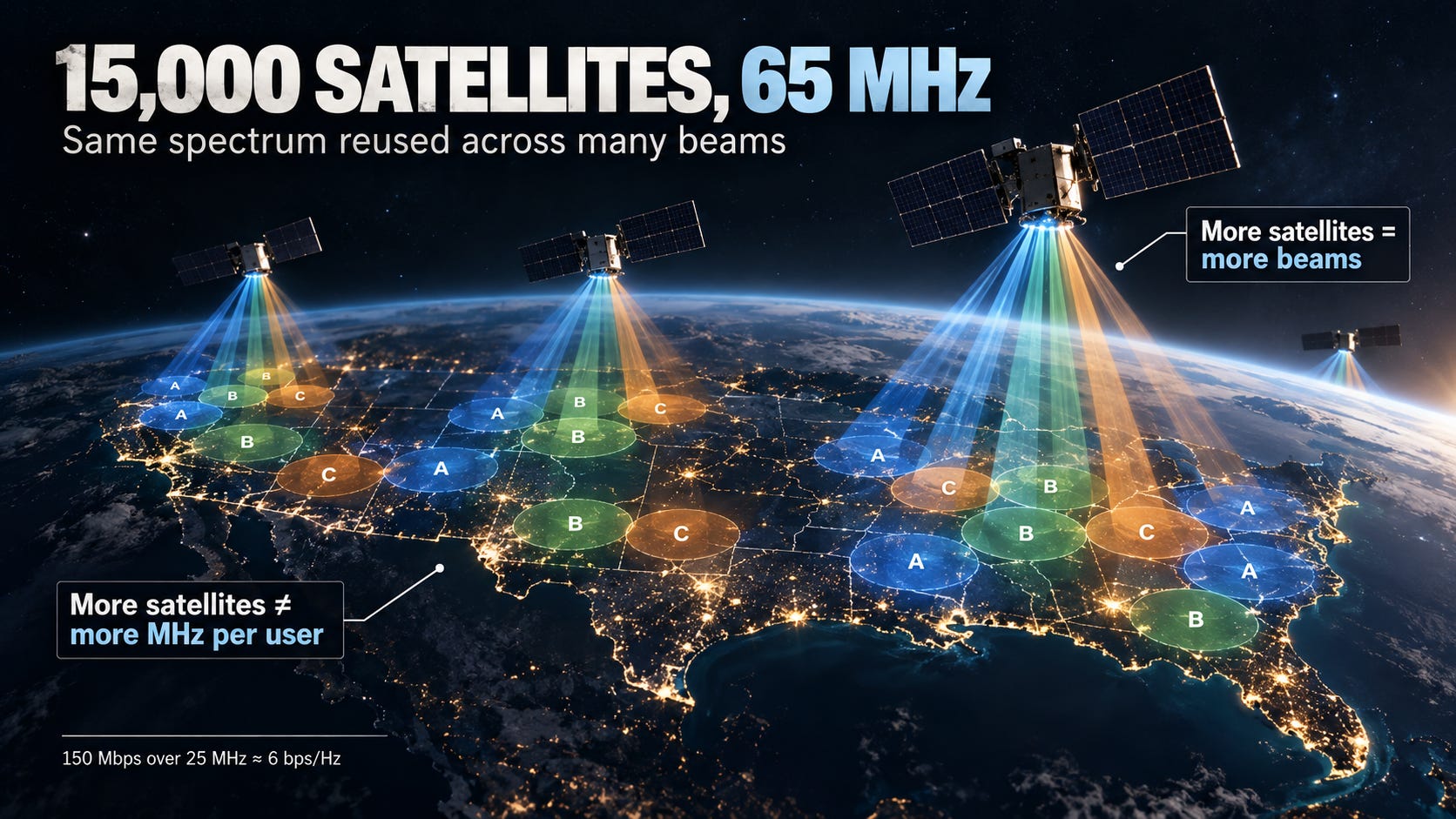
SpaceX’s second-generation mobile satellites are designed to deliver roughly 20 times the throughput of today’s direct-to-cell satellites. The key technology is advanced phased-array antennas that can generate thousands of focused beams, allowing the same radio frequencies to be reused across different geographic areas.