
From Moving Symbols to Moving Meaning: The Next Architecture for Intelligent Networks
In the AI era, transporting data is no longer enough. Networks must understand the context of what they carry, extracting relevance, compressing redundancy, and enabling systems that act on meaning

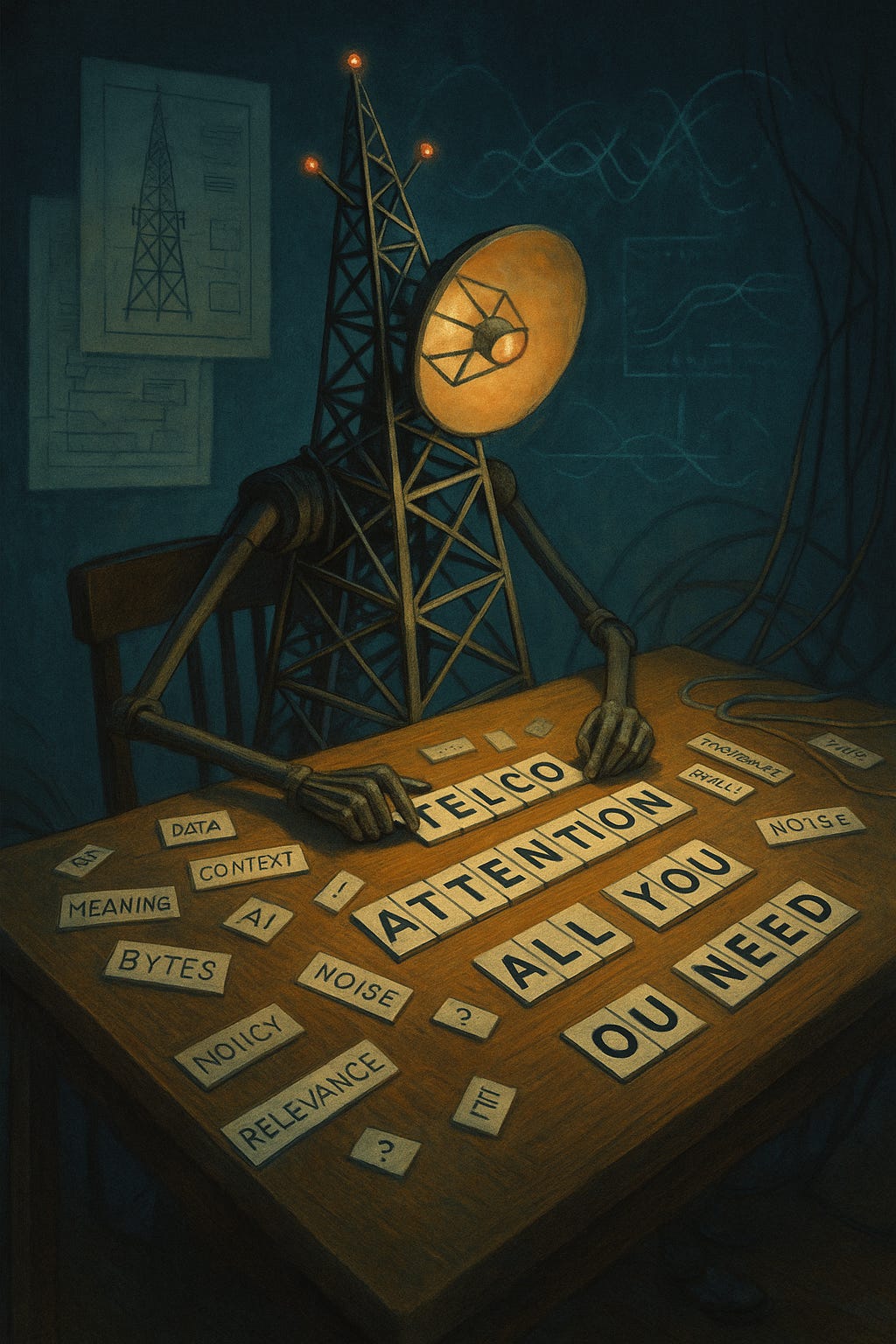
From Telegraphs to Transformers
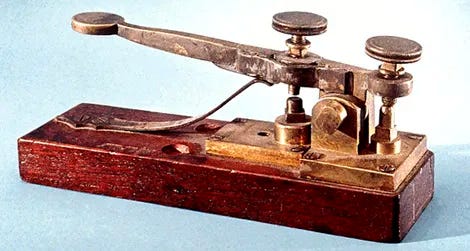
Telecommunication began as the simple transfer of electrical pulses along a wire. Each innovation since then has improved the capacity and reliability of that transfer. Morse code, telephony, digital switching, optical fiber, mobile radio, and packet routing all extended the same idea. The purpose of the network was to move symbols accurately and quickly.
Claude Shannon gave this idea its mathematical foundation. His theory defined information as the reduction of uncertainty. Meaning was deliberately excluded. By separating syntax from semantics, he allowed engineers to design systems that could be measured, optimized, and scaled. That separation built the entire digital world.
Today, that foundation is complete. Global IP traffic exceeds six hundred exabytes a month and continues to rise. A mobile network can deliver data with millisecond precision to any location on the planet. From a physical perspective, communication has reached near perfection.
Yet this success has exposed a structural limitation. Networks can move any quantity of symbols, but they do not know why those symbols matter.
They are optimized for transfer, not interpretation. In a world where artificial intelligence generates and consumes most of the traffic, the constraint is no longer bandwidth but comprehension.
The next stage in communication will not be about faster transport. It will be about the network’s ability to identify which information is relevant to the task at hand and which is not. The transition from moving symbols to moving meaning is now a technical requirement, not a philosophical one.
Keep reading with a 7-day free trial
Subscribe to Sebastian’s Substack to keep reading this post and get 7 days of free access to the full post archives.